Women’s History Is American History: Our Women & Wine Community Goes to Washington
Updated: Sep 18

In May, Women & Wine had the wonderful opportunity to welcome Kari Nussle and Jill Hayes from Washington, D.C., who introduced us to the Smithsonian American Women’s History Museum (SAWHM) and its Making History Network. Their message stayed with us: women’s stories are not a side note in American history—they are central to it.
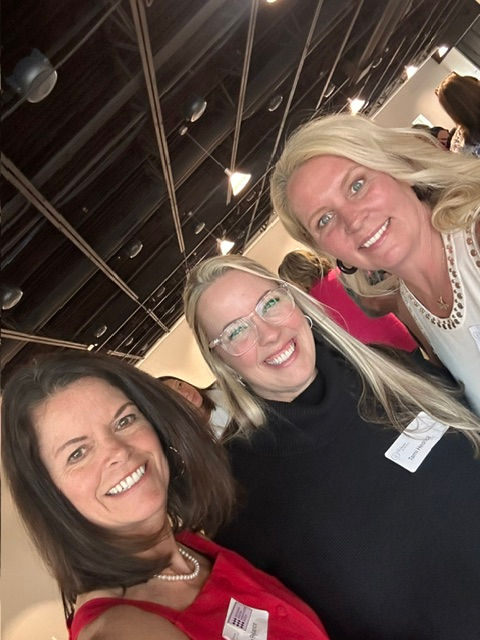
That conversation turned into action. As Minnesota State Ambassadors for SAWHM, several members of our Women & Wine community joined me in Washington, D.C., alongside approximately 80 ambassadors from across the country, for the inaugural Making History Network Summit. We came home energized, informed, and even more committed to helping build a future where women’s contributions are seen, celebrated, and remembered.
A community with a purpose
The Making History Network is SAWHM’s nationwide ambassador community. Its volunteers help build awareness, strengthen local connections, inspire philanthropic support, and make sure the museum’s work reaches people where they are—not just someday in Washington, but right now in communities across the country.
For our Minnesota delegation, the summit was a powerful reminder that meaningful change starts with relationships. We met women from roughly 20 states who share the same hope: that future generations will encounter a fuller, more honest story of America, one that recognizes women’s leadership, creativity, resilience, and impact.
We were especially grateful for the warm welcome from the National Capital Region Ambassadors and for the new kinship we found with fellow ambassadors from Michigan and Wisconsin. It was a beautiful example of what happens when women gather with purpose: we connect, we learn, we encourage one another, and then we bring that energy home.
I am personally so grateful to Heather Stewart, who first invited me into this work and has become a dear friend over the past few years. And I am thankful for the Women & Wine community members who have stepped forward to serve as ambassadors. This work is bigger than any one of us, and that is exactly what makes it so meaningful.
What we learned in Washington
Our days in D.C. were full—from a welcome reception with ambassadors from around the country to a day of programming at the National Museum of American History and an evening program at the National Museum of Asian Art featuring Anita McBride, former Chief of Staff to First Lady Laura Bush and a respected expert on first ladies.
The summit explored what it takes to build a museum, grow a national audience, communicate women’s history in compelling ways, and create impact through philanthropy. One message came through loud and clear: a museum is not simply a building filled with objects. It is a place where stories create connection, empathy, curiosity, and action.
What especially inspired me was the emphasis on making this work accessible now. The Smithsonian American Women’s History Museum is already creating opportunities for people to engage with women’s history through digital storytelling, educational resources, public programs, partnerships, and experiences that bring overlooked stories into everyday conversations. The museum is not waiting for a future building to begin its work—it is helping people discover, celebrate, and share women’s history today.
The summit also reminded us that progress is built through consistency. It takes people willing to show up, share the vision, invite others in, and keep moving forward together. Women understand that kind of persistence. Hard work is not always easy—but we know what can happen when a community brings its energy, heart, and voice to something bigger than itself.
As one summit speaker put it, “Philanthropy is turning possibility into reality. Everyone can be a philanthropist.”
That idea feels especially right for Women & Wine. Philanthropy is not only about writing the largest check. It can mean sharing an idea, introducing someone to the mission, volunteering your time, telling a story, opening a door, bringing a friend, or using your voice.
Bringing unhidden heroines to life
One of the most memorable parts of the trip was experiencing Unhidden Heroines, SAWHM’s augmented-reality project that brings five remarkable women into view at iconic locations on the National Mall.
Using a phone, visitors can encounter digital representations of women whose stories have too often been overlooked: Julia Ward Howe, Elizebeth Smith Friedman, Polly Cooper, Dr. Dorothy Height, and Mary Katharine Goddard.
For me, it was moving to stand alongside Julia Ward Howe at the Lincoln Memorial. Howe wrote “The Battle Hymn of the Republic,” a song that became one of the defining anthems of the Union during the Civil War.
At the Martin Luther King, Jr. Memorial, we also experienced the story of Dr. Dorothy Height, the civil and women’s rights leader often called the “Godmother of the Civil Rights Movement.” Her decades of leadership, organizing, advocacy, and coalition-building helped shape the movement and broaden its reach.
These encounters did more than share historical facts. They made the women feel present. Human. Real.
That is the magic of this work. When we put women’s stories in their rightful place, we do not diminish anyone else’s contribution—we enrich the entire American story.
And the best part? You do not have to travel to Washington, D.C., to experience it. The Unhidden Heroines experience is available online, so you can explore these stories from home and share them with the people in your life.

Women Making History Right Now
One of the true highlights of our time in Washington, D.C., was meeting women who are making history in real time through their work at the Smithsonian’s National Zoo and Conservation Biology Institute.
During our visit, we heard from female scientists, researchers, and curators whose work reaches far beyond the animals we see at the Zoo. Their research strengthens animal care, advances conservation, supports endangered species, and provides knowledge that can benefit zoos, conservation partners, and wildlife efforts around the world.
We heard the remarkable story of little Linh Mai, a baby elephant whose survival was made possible through extraordinary science, teamwork, persistence, and care. I will spare you the scientific details—but let’s just say there was a lot of wonder, amazement, and appreciation in the room for the creativity and expertise required to help this little one thrive.
What struck me most was that this work is not only about one animal or one zoo. These women are generating research, tools, and insights that help improve animal welfare and conservation efforts across the country and around the world. Their work is a powerful reminder that science can be compassionate, collaborative, and deeply personal.
Among the women we had the privilege of learning from were:
Katherine Mertes, whose work focuses on animal movement, remote sensing, GIS, species reintroduction, and conservation biology. Her projects include researching wildlife disease and supporting the reintroduction of scimitar-horned oryx, a species once widespread across North Africa and now extinct in the wild.
Dr. Janine Brown, a research physiologist and head of the endocrinology laboratory at the Smithsonian Conservation Biology Institute. She is a world authority on elephant reproductive biology and has helped advance artificial insemination techniques, noninvasive hormone monitoring, and reproductive and welfare research for elephants and many other species.
Melissa Songer, a conservation biologist whose work uses field research, animal tracking, remote sensing, and community-based conservation strategies to support endangered species and habitats. Her work includes projects involving Asian elephants, giant pandas, Przewalski’s horses, scimitar-horned oryx, and biodiversity conservation in Myanmar. She has also trained more than 1,000 conservation professionals from more than 40 countries.
Sara Hallager, Curator of Birds at the Smithsonian’s National Zoo and Conservation Biology Institute. With nearly four decades of experience in avian management, she leads bird welfare, conservation, reproductive programs, public engagement, and efforts to help protect threatened bird species.
Dr. Sally L. Bornbusch, whose research explores the tiny but mighty world of animal microbiomes. Her work looks at how microbes affect animal health, nutrition, reproduction, and conservation—supporting species such as lemurs, cheetahs, black-footed ferrets, and primates through a “One Health” approach that recognizes the connection between people, animals, and the environment.
It was inspiring to see the breadth of their work: biology, animal care, reproductive science, ecology, conservation, genetics, data, and public education—all coming together to create better outcomes for animals and the planet.
These women reminded us that making history does not always happen on a stage or in a history book. Sometimes it happens in a laboratory, in a conservation field site, through years of research, in a difficult decision, or in the patient work of helping one small baby elephant survive and thrive.
Women’s Stories That Reached Beyond America
During our visit, we also learned about Smithsonian curatorial work highlighting American women whose impact reached across the world, including France. One of those women was Rose O’Neill, the creative force behind the beloved Kewpie characters and dolls.
O’Neill was far more than the inventor of a charming collectible. She was an artist, illustrator, writer, entrepreneur, and suffragist whose work found an audience in both the United States and France. She exhibited in Paris and was selected into the prestigious Société des Beaux-Arts in 1906, an important recognition for a woman artist of her era.
Through her Kewpie characters, O’Neill built a global creative brand while also using her art to support women’s suffrage and speak to issues of equality. Her story is a fun and powerful reminder that women’s influence can travel farther—and last longer—than we may realize.
Celebrating Mona Sinha
We were also honored to hear from S. Mona Sinha, CEO of Equality Now, a globally recognized advocate for gender equality and a leader whose work reflects the very mission of the Smithsonian American Women’s History Museum: making women’s lives, contributions, and leadership impossible to overlook.
Mona has spent more than 25 years working at the intersection of law, equity, philanthropy, advocacy, and global change. As CEO of Equality Now, she leads worldwide efforts to reform laws that discriminate against women and girls. Her leadership has contributed to legal reforms in more than 135 laws globally, helping move women’s rights from possibility to protection.
We were especially excited to celebrate Mona’s selection as a 2026 inductee into the National Women’s Hall of Fame. She will be formally honored on September 24, 2026, alongside an extraordinary class of women whose achievements have shaped American life across public service, athletics, science, literature, and social justice.
Her recognition is so well deserved—and it was meaningful to be in the room with a woman whose leadership continues to turn bold ideas into tangible progress for women and girls around the world.
Why this matters to Women & Wine
I am humbled to be part of the Making History Network, and I do this work for all of you—for my daughters, my mother, my grandmother, the women who came before us, and the women who will come after us.
During this trip, we encountered women whose contributions spanned history, public leadership, science, conservation, advocacy, education, and philanthropy. From Julia Ward Howe and Dr. Dorothy Height to the Smithsonian scientists caring for endangered species today, we were reminded that women’s impact is everywhere.
Some of those stories are well known. Many are still hidden. And some are being written right now by women like Mona Sinha, Katherine Mertes, Janine Brown, Melissa Songer, Sara Hallager, Sally Bornbusch, and so many others who use their expertise and energy to make our world stronger.
This is why the Smithsonian American Women’s History Museum matters. It helps us see the whole story—not just who came before us, but who is creating change today and who will be inspired to lead tomorrow.
So many women have helped shape America in visible and invisible ways. They led movements, raised families, built businesses, fought for justice, made discoveries, wrote, taught, created, organized, gave, and persisted. Yet too often, their names and stories remain hidden.
The Smithsonian American Women’s History Museum is working to change that—not only through a future physical museum, but through digital storytelling, public programs, community partnerships, and experiences like Unhidden Heroines today. The museum’s vision is a more representative history and, ultimately, a more connected future.
One quote shared during the summit captured the spirit of this work beautifully:
“Dreaming is a form of planning.” — Gloria Steinem, shared in remembrance during the summit.
The museum is a dream in progress. But it is not a distant dream. It is being built now through the stories being gathered, the digital experiences being created, the relationships being formed, and the people choosing to get involved.
How you can help
Every one of us can play a part in making women’s history more visible.
Learn: Explore the stories in the Unhidden Heroines experience and share one that surprises or inspires you.
Share: Tell a friend, colleague, daughter, son, parent, or neighbor why a national museum dedicated to women’s history matters.
Donate: Support SAWHM’s work as it continues building awareness, programs, digital experiences, and the path toward a permanent home.
Connect: Join the conversation with Women & Wine and the Making History Network. The more people who understand the vision, the more momentum we create.
Tell a woman’s story: Ask the women in your life about their experiences, accomplishments, turning points, and lessons. A simple question like, “What’s your story?” can open a meaningful door.
Women & Wine has always been about more than gathering over a glass of wine. We are a community built on trusted relationships, encouragement, vulnerability, and the belief that women are stronger when we show up for one another.
Our time in Washington reminded us that our stories matter. Our voices matter. And when we come together—whether in Minnesota, D.C., or around a table with friends—we can help make history a little more complete.
Here’s to the women who came before us, the women making history today, and the women who will see themselves in the stories we make visible tomorrow.
On this theme, I'd like to recommend a book, "We the Women" by Norah O'donnell and Kate Anderson Bower. https://www.penguinrandomhouse.com/books/746548/we-the-women-by-norah-odonnell-with-kate-andersen-brower/